The story of "Right on Time" (Bul Bazman), my graduation project at Bezalel Academy of Arts and Design, started back in my second year. Even then, I knew one thing for certain: no matter what, I was going to build a full-scale game show. I didn't know the exact format, the mechanics, or the underlying narrative yet. But I knew I wanted to create something that wouldn't live solely on a flat screen. I wanted a physical platform where real players could touch physical interfaces, actively inhabit the space, and feel truly immersed in an experience rather than merely watching pixels drift across a display.
Finding the Format: Why 4 Players?
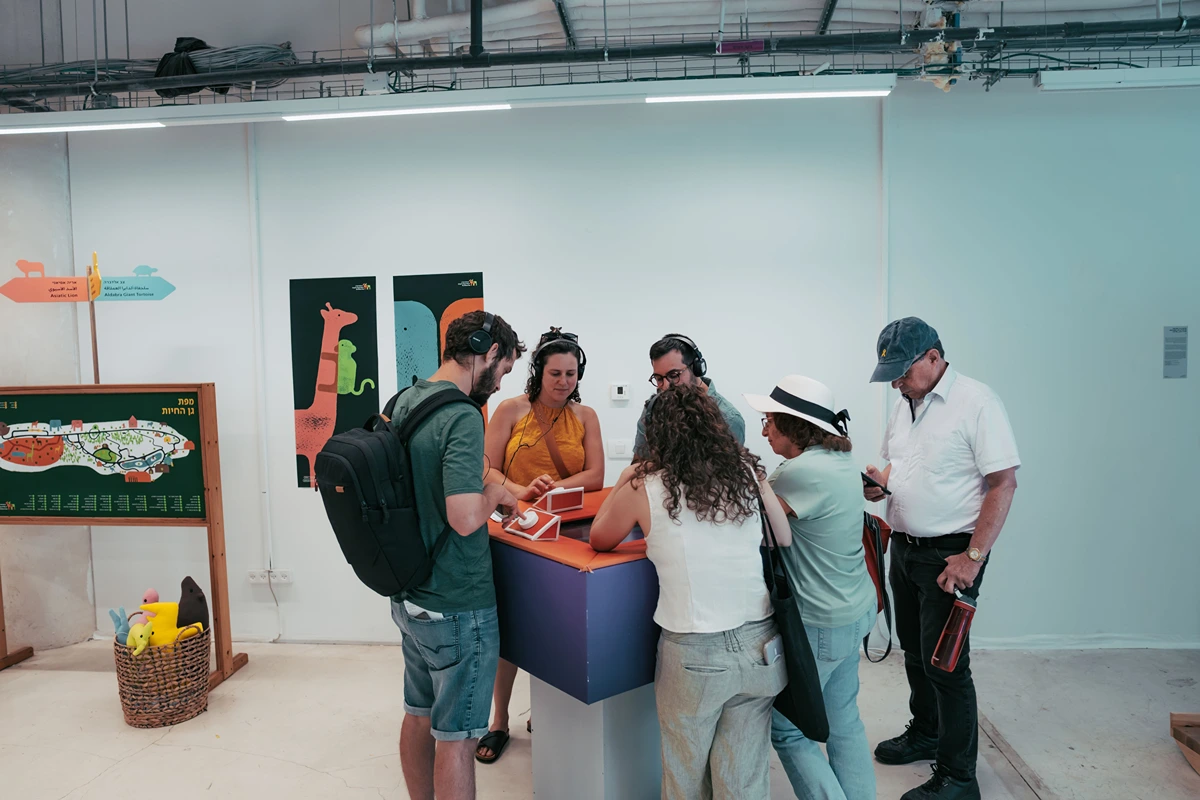
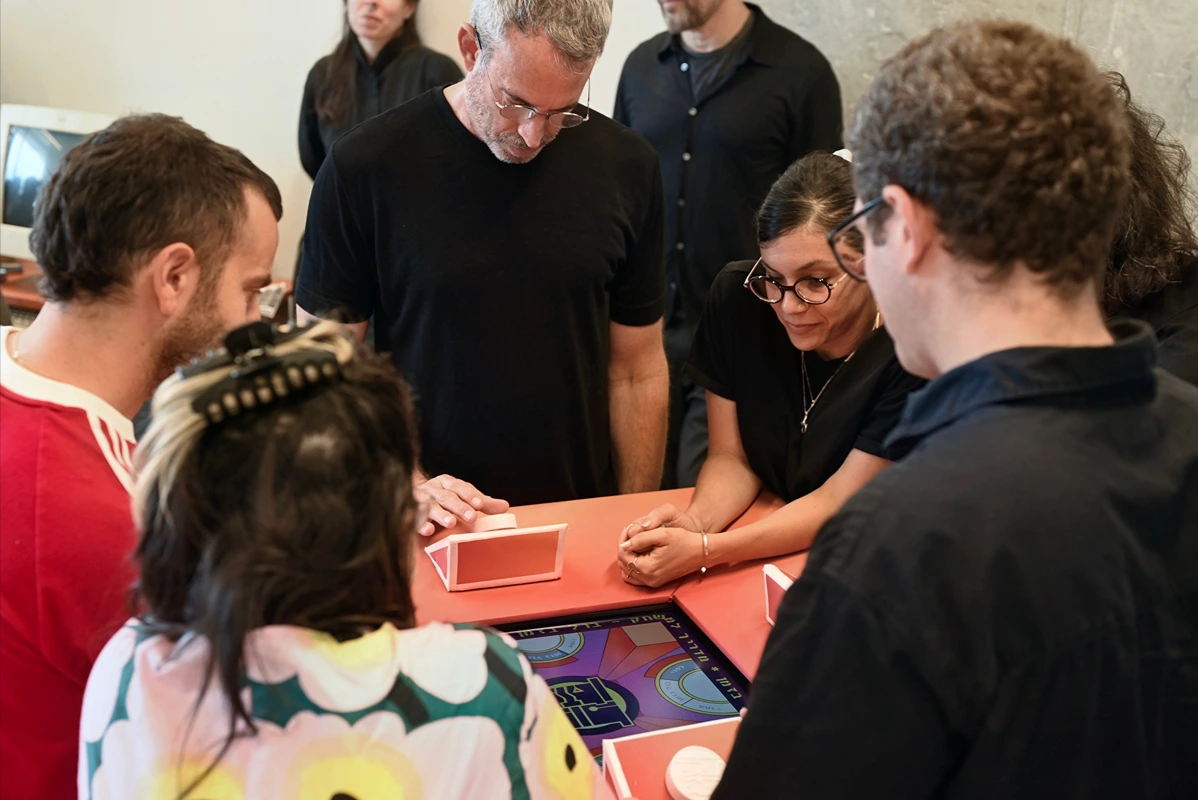
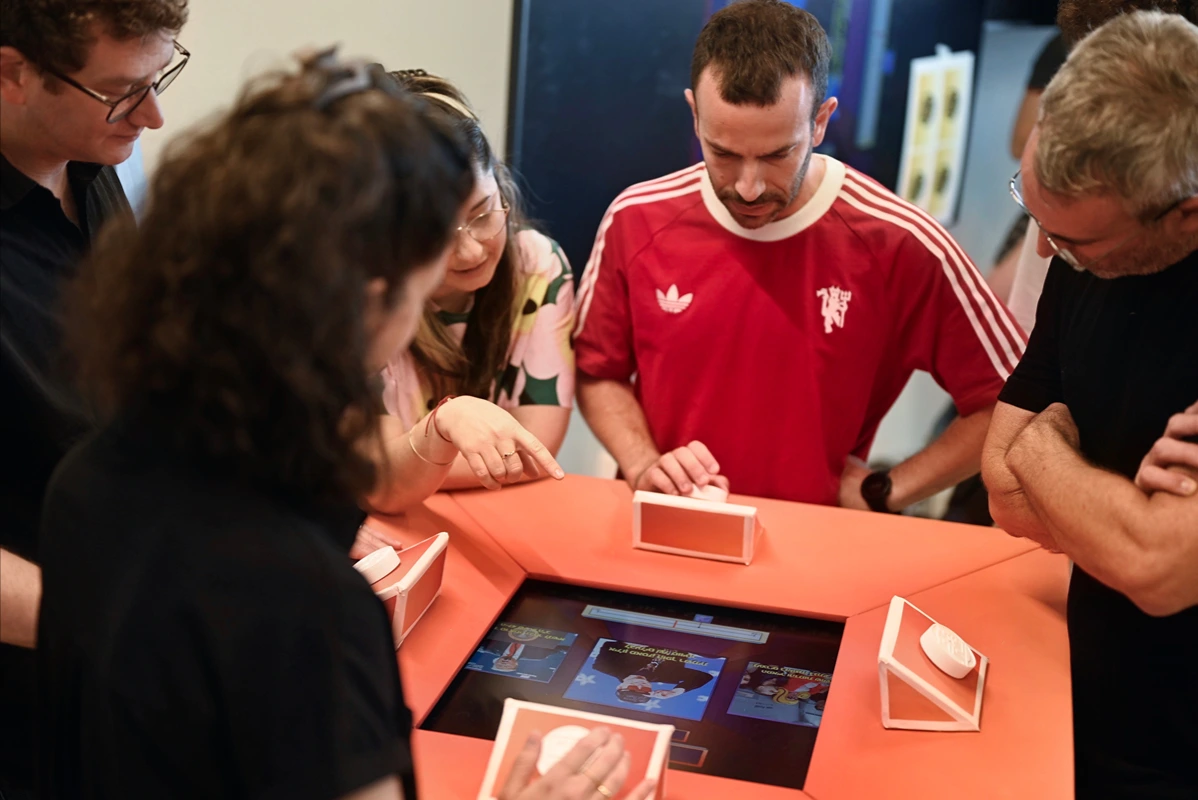
The first challenge was determining the player count. A two-player game felt too intimate and basic for a game show setting. Following my experimental project "Truth Machine" in the Alt-Control course and testing multi-user dynamics in the Serious Games studio, the answer became clear: the experience needed to host four players. Standing face-to-face around a table—evoking the communal intimacy of a classic board game, yet driven by the responsiveness and kinetic energy of a digital arcade.
The Concept: Reclaiming Our Shared Timeline
The narrative emerged from lived experience. During the exhausting routines of air-raid sirens and sheltering, a neighbor turned to me one afternoon and asked: "What day is it today?" I realized that not only was I unsure of the day, but I couldn't even tell whether we had last crossed paths in the shelter an hour ago or two days prior. The perception of time had fractured completely. I struggled to mentally chronology not just the weeks of conflict, but the preceding years of my degree. That disorientation sparked the core idea: part competition, part collective journey to reclaim our footing in an overwhelming reality. Each player in turn attempts to piece together fragments of our shared memory, confronting the paradox where major milestones feel like they happened just moments ago, yet simultaneously belong to a distant era.
The Interface: Tactile Simplicity
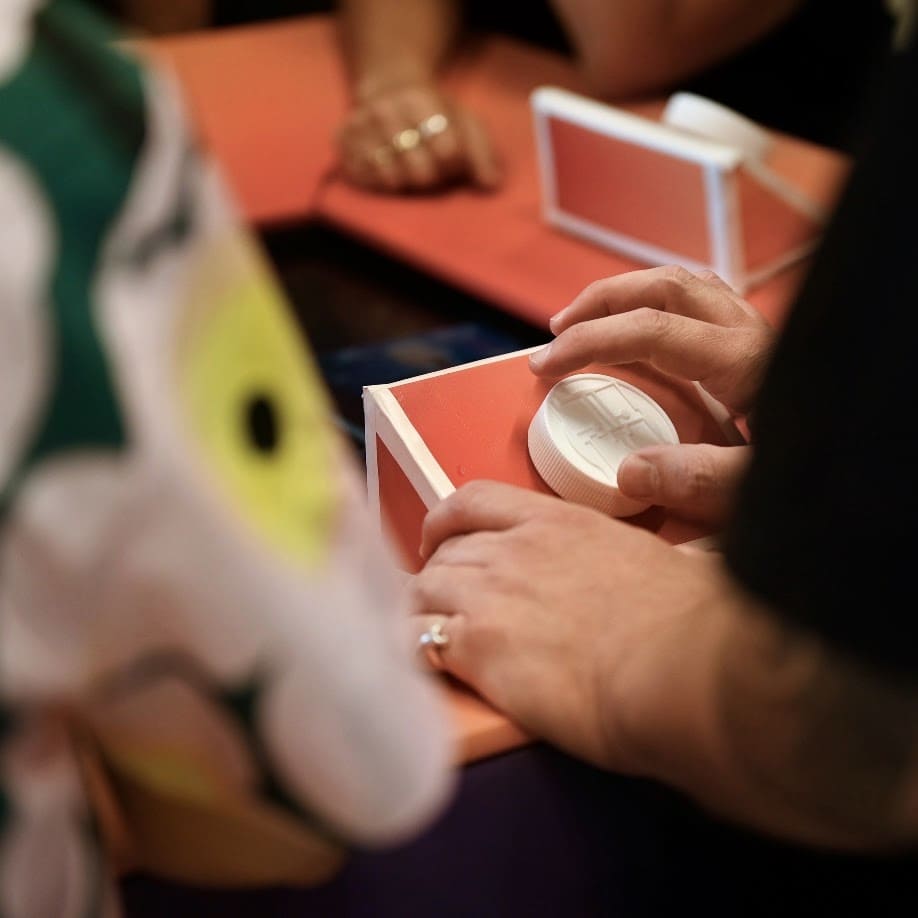
Keeping the core interaction immediate and intuitive was paramount. I chose a fundamental physical input: a rotary encoder knob. Rotate Left/Right: Smooth scrolling and navigating through timelines and event lists. Click (Short or Long Press): Confirming choices, selecting categories, and locking in answers.
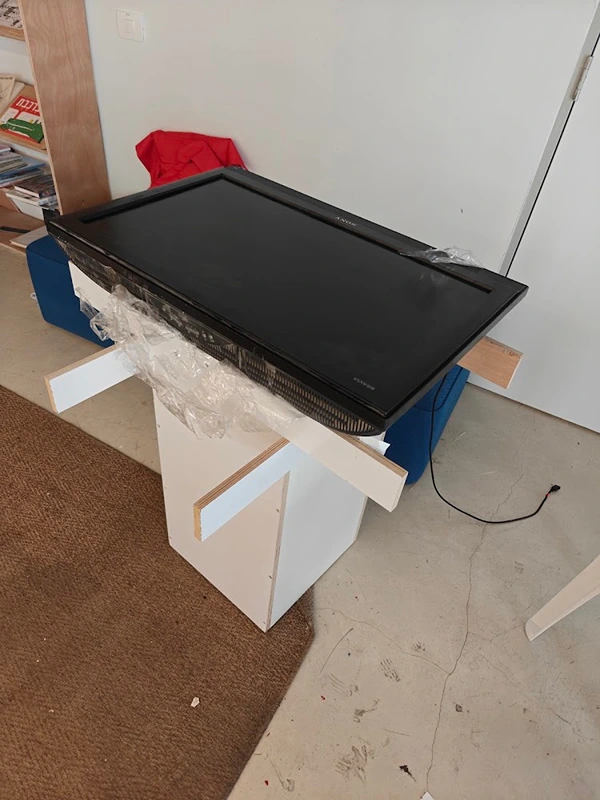
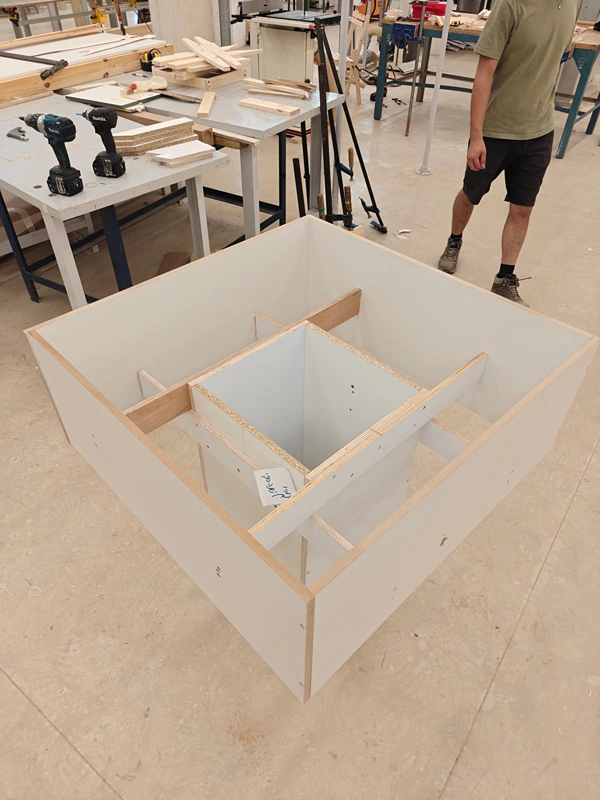
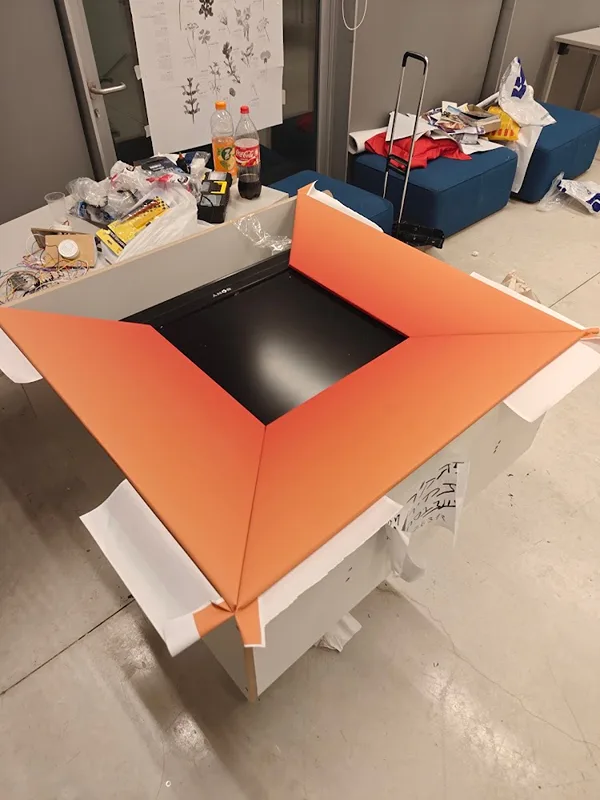
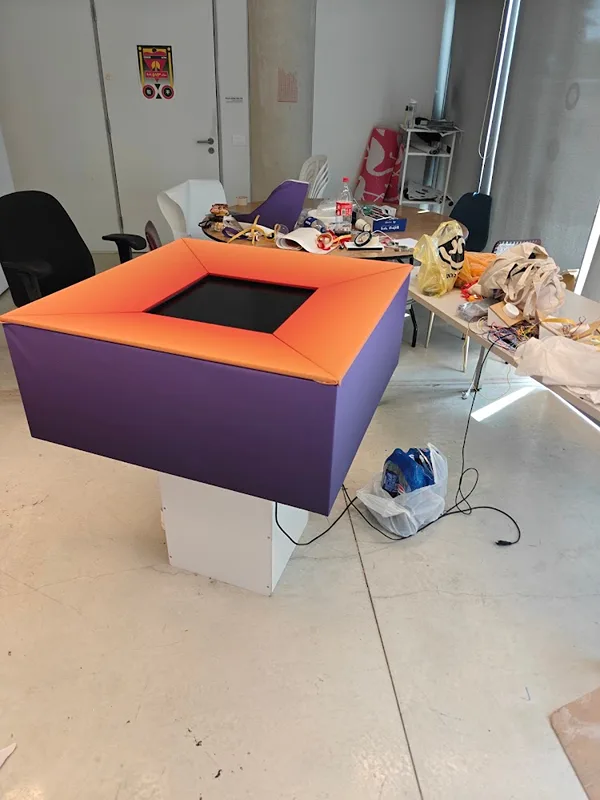
I designed the console table as a clean square—both to ensure geometric parity among all four participants and as a symbolic structural motif: 4 players, 4 years, 4 seasons, and 4 intensive months of fabrication. At the center, a standard monitor was recessed beneath a custom wood bezel that cropped the display into a square aspect ratio. The engineering challenge lay in creating an ergonomic installation that could safely house the display and internal electronics, while remaining sturdy enough to withstand thousands of enthusiastic visitors throughout a crowded degree exhibition. I sourced the structural timber from salvaged exhibition walls (with special thanks to the Bezalel Marketing Department for the discarded panels), and recovered the monitor from my student apartment's utility closet—a dusty 2013 display that still functioned without a hitch.
Fabrication Process & Studio Notes
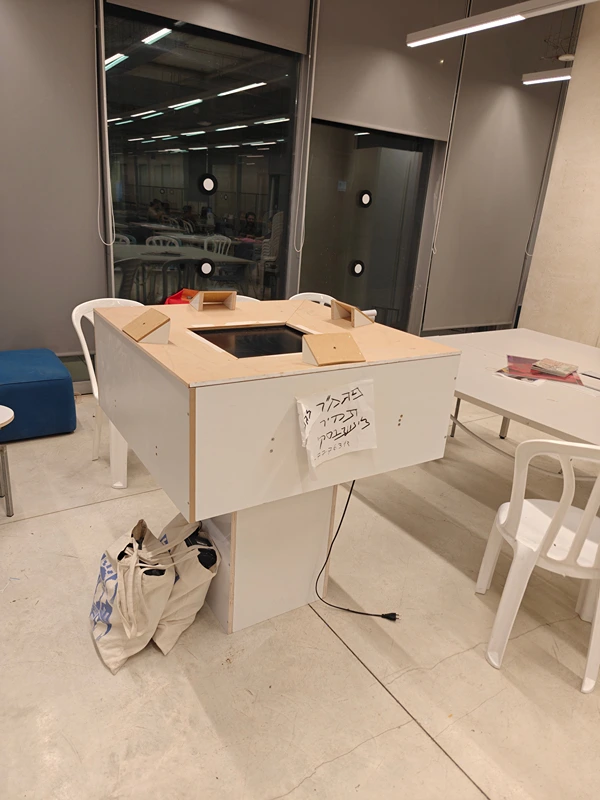
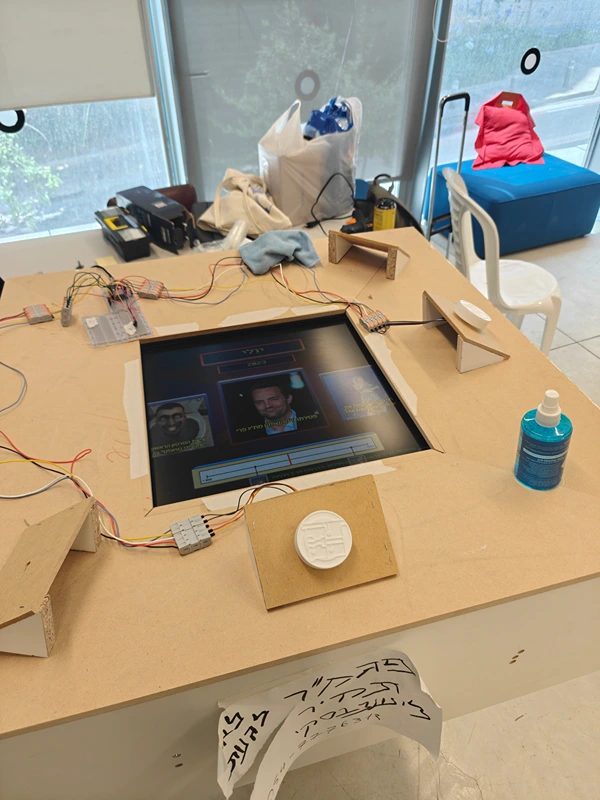
Core Mechanics: Trivia Meets Social Deduction
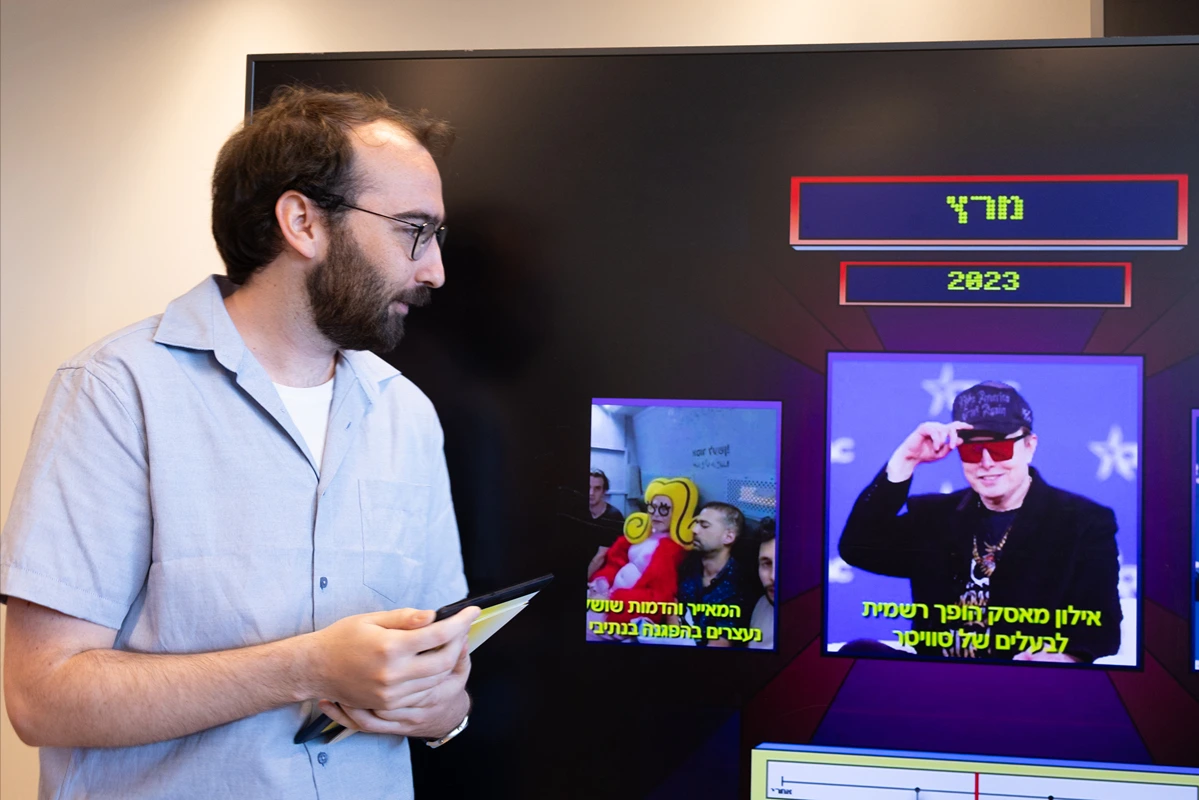
The gameplay went through several iterations before crystallizing into its final loop: Curated Event Pool: The engine selects 12 events from an archive of over 60 verified milestones spanning 2022 to 2026. The Guess: The system draws a target month and year; the active player must identify which of the 12 events took place at that exact moment. The Counter-Bet ("Hahimur Hanechdi"): To eliminate downtime while waiting for a turn, opponents stay engaged through a wagering phase. Once a player locks in a guess, the remaining three bet on whether the actual date occurred before, after, or right on time. Correct predictions siphon points directly from the guessing player, sparking table-wide tension and banter.
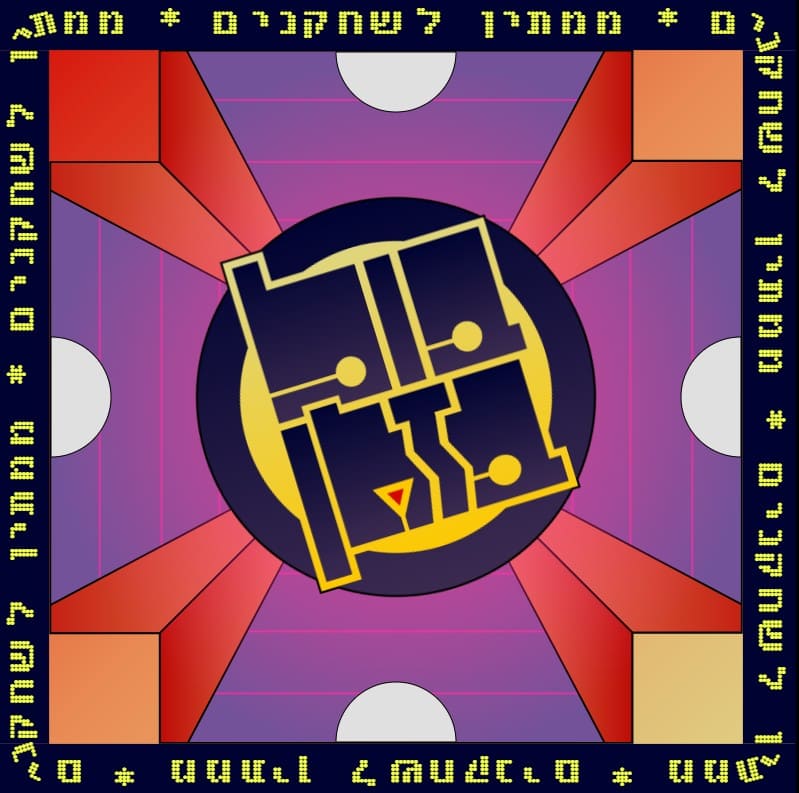
The Visual Engine: Procedural Vectors in Code
The entire front end runs directly in the browser powered by p5.js. Aside from raw body copy and photographic assets, every graphical component is procedurally rendered as vector geometry drawn straight onto the HTML canvas, entirely bypassing rasterized sprite sheets. This architecture formed a responsive, programmatic design system that seamlessly adapts to variable headline lengths, diverse aspect ratios, and shifting color palettes. Aesthetically, the visual language bridges 1970s broadcast game shows with fond childhood memories of Israeli educational and children's television staples (Pitzuhim, Shavit/Shashtos). What always fascinated me about those sets was how technical and budget constraints became generative aesthetic drivers rather than limitations. I wanted the interface to feel delightfully suspended in time—nostalgic, slightly mysterious, yet distinctly original.
Under the hood, each rotary module wired directly into an ESP32 microcontroller, serving as the low-latency hardware bridge translating analog rotation into browser commands. The software executed locally on a hidden mini-PC mounted inside the hollow frame. One of my favorite moments during the show was chatting with players after a round, inviting them to peer under the hood, and reassuring them that the exposed breadboards and cable bundles weren't an explosive device.
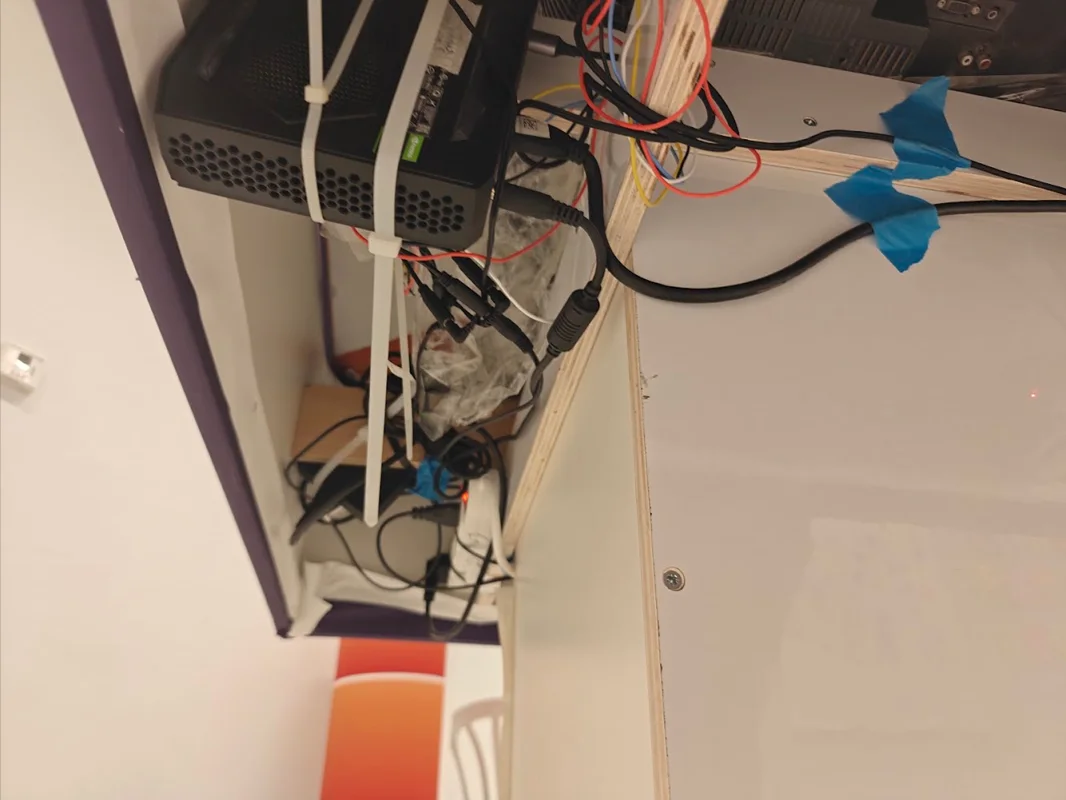
Electronics & Spatial Finishes: The Studio Set Illusion
The final detail was integrating the software's visual identity directly onto the physical furniture. Bare structural wood felt dissonant, yet meticulous sanding, priming, and multi-tone painting would have drained precious development time. The solution was rapid and graphic: large-format printing the game's core gradient onto durable synthetic canvas sheets, tightly wrapping each structural panel like a bespoke gift box. While the joinery always reveals room for tighter tolerances, it stayed true to the spirit of stage production: building a working, immersive set designed to transport players straight into the broadcast.
The Show in Action: Exhibition Highlights
.webp)